Description
The Concept Behind the Proof
The name Full Proof is not a marketing descriptor — it is a precise technical statement. Under United States federal bourbon regulations, distillate must enter the barrel at no higher than 125 proof. That maximum entry proof is the federally defined threshold at which the interaction between new spirit and new charred oak begins.
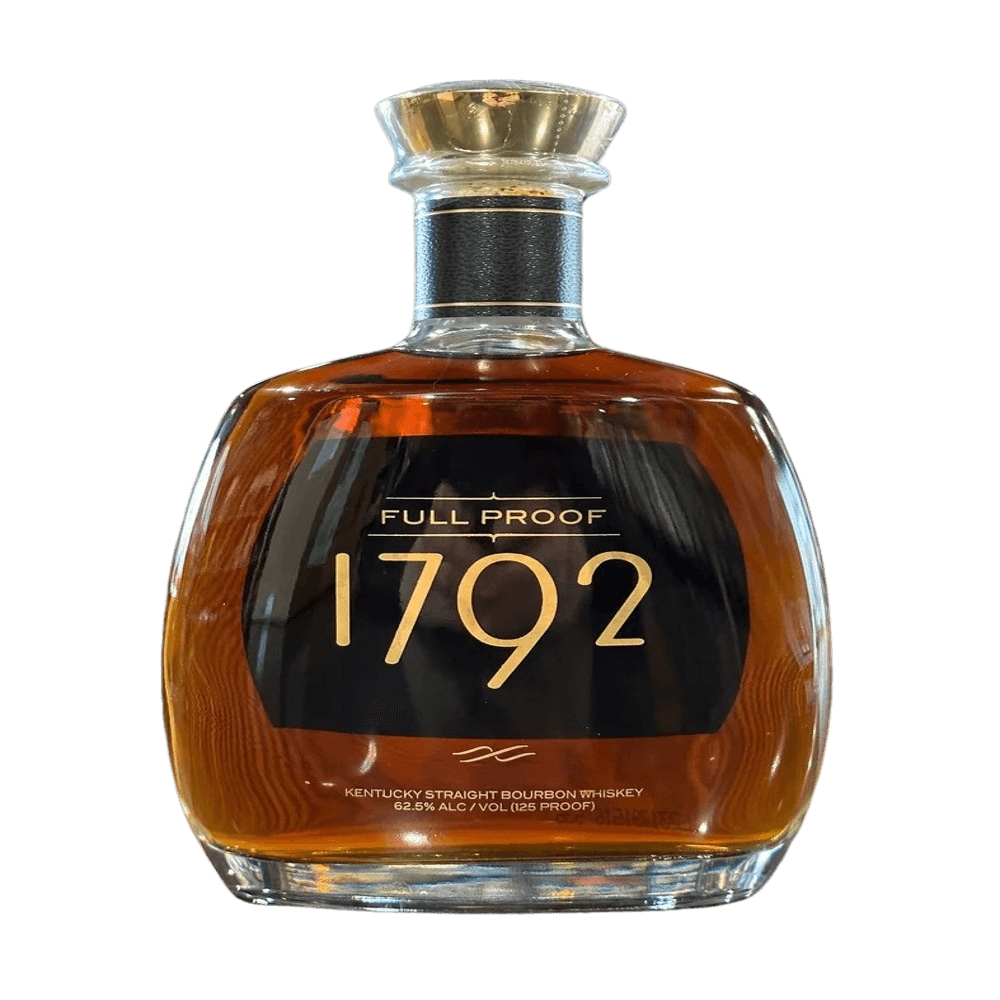
1792 Full Proof Bourbon is bottled at exactly that entry proof — 125 — returning the aged distillate to the same alcohol concentration it carried when it first contacted the wood. The result is a bourbon that invites a direct sensory comparison between what the spirit was at barrel entry and what years of oak maturation have added to it since.
The Barton 1792 Distillery
The Barton 1792 Distillery in Bardstown, Kentucky is one of the oldest continuously operating distilleries in the United States — a facility with production roots stretching back to 1879 and a current ownership under Sazerac Company that has invested significantly in modernizing production capacity while preserving the historical character of the site.
Bardstown’s designation as the Bourbon Capital of the World is not incidental context — the region’s specific limestone water, climate patterns, and rickhouse infrastructure have shaped the flavor profile of every expression produced there for over a century. The 1792 lineup represents Barton’s premium expression tier, with Full Proof sitting at the top of the core range as the highest-proof and most intensive bottling in the series.
The High-Rye Mash Bill at Full Proof
The Barton 1792 Distillery produces its expressions on a high-rye mash bill — a grain formula that prioritizes rye’s spice-forward, dry complexity as a defining flavor characteristic. At standard proof points, that high-rye character delivers the assertive spice and structured tannin profile that defines the 1792 lineup.
At 125 proof, those same characteristics are amplified to their maximum natural concentration. The rye spice is not simply more present — it is more layered, more complex, and more capable of revealing nuances that lower proof bottlings compress or obscure. Collectors who buy 1792 Full Proof Bourbon are acquiring the high-rye Barton mash bill at the intensity ceiling that federal law defines.
Tasting Profile & Sensory Architecture
The nose at 125 proof is immediate and concentrated — rich vanilla, dark caramel, and a bold rye spice wave that commands attention without being unpleasant. Aged leather, toasted oak, and a dark dried fruit note develop behind the primary aromatics as the glass opens up. Time in the glass and measured water addition are strongly recommended to unlock the full aromatic complexity.
On the palate, the full proof delivers a thick, coating texture with concentrated cracked black pepper, cinnamon bark, dark cherry, and a deeply integrated oak tannin structure that builds through the mid-palate with deliberate weight. The finish is very long, intensely dry, and rye-forward — dark chocolate, aged leather, and persistent spice carrying well past the swallow with a warmth that builds and sustains rather than fading quickly.
The Case for Water Addition
At 125 proof, 1792 Full Proof is one of a small number of American bourbon expressions where water addition is not simply acceptable — it is the recommended primary tasting approach for most drinkers. A measured addition of still water disrupts ethanol-flavor compound bonds, releasing aromatic and flavor molecules that high alcohol concentration suppresses.
The optimal water addition point varies by individual palate, but most serious tasters find the expression opens most completely somewhere between a 1:6 and 1:10 water-to-spirit ratio. Experimenting with incremental addition to identify a personal proof preference is standard practice at this strength and produces a meaningfully different — and often more revealing — tasting experience than neat consumption.
Comparative Context & Proof Point Significance
The 125 proof barrier is one of the most meaningful numbers in American whiskey regulation. It defines the maximum concentration at which bourbon and rye distillate can legally interact with new charred oak — a threshold established to ensure that the spirit entering the barrel retains sufficient water content for the char layer to function as the filtration and flavor contribution mechanism it is designed to be.
When you buy 1792 Full Proof Bourbon through Allocated Bourbon Vault, you are acquiring a bottle whose proof point is not an arbitrary marketing decision but a specific reference to the regulatory framework that defines American bourbon production. That conceptual precision, combined with the genuine flavor intensity it delivers, makes this one of the most intellectually coherent high-proof expressions in the category.
Collection Positioning Within the 1792 Lineup
Within the Barton 1792 portfolio, Full Proof sits at the apex of the core range — above the standard 1792 Small Batch, the 1792 Sweet Wheat, and the 1792 High Rye expressions in terms of proof intensity and production concept. It is the expression that most completely documents the distillery’s distillate at its most concentrated and unmediated.
For collectors building structured 1792 portfolio sets, Full Proof is the mandatory high-proof anchor — the reference point against which every other expression in the lineup can be measured in terms of proof-driven flavor amplification. It is also one of the more accessible ultra-high-proof bourbons in terms of retail price relative to comparable expressions from other distilleries at this proof range.
Premium Packaging & Secure Delivery Protocol
Every order fulfilled through Allocated Bourbon Vault is processed under our multi-point authentication and secure dispatch protocol. Bottles are inspected for seal integrity, label condition, and fill level before dispatch.
All shipments are packed in reinforced, spirits-grade insulated cartons with tamper-evident outer sealing. Signature-required delivery is standard on all orders. Temperature-sensitive routing is applied during summer months at no additional cost. Insurance coverage is included on every shipment up to full declared value.
Transactional Vault FAQs
Q: What does “full proof” mean in the context of 1792 Full Proof Bourbon?
A: Full proof refers specifically to the federal maximum barrel entry proof of 125 — the highest proof at which bourbon distillate may legally enter a new charred oak barrel under U.S. regulations. 1792 Full Proof is bottled at exactly that proof, returning the aged distillate to the same alcohol concentration it carried on its first day of barrel maturation.
Q: Why is 125 proof the legal maximum for bourbon barrel entry?
A: U.S. federal bourbon regulations cap barrel entry proof at 125 to ensure the new spirit retains sufficient water content for the charred oak layer to function as both a filtration mechanism and a flavor contribution system. Entering the barrel at higher proof would reduce the spirit’s interaction with the wood and alter the maturation chemistry that defines bourbon’s flavor development.
Q: Should 1792 Full Proof be consumed neat?
A: Neat consumption is possible but not the recommended primary approach at 125 proof. Measured water addition — typically between a 1:6 and 1:10 water-to-spirit ratio depending on individual palate — chemically opens the spirit by releasing flavor compounds suppressed by high alcohol concentration. Most serious tasters find the expression reveals its full complexity through incremental water addition rather than neat consumption.
Q: How does 1792 Full Proof compare to other high-proof bourbons like Bulleit Barrel Strength or Wild Turkey Rare Breed?
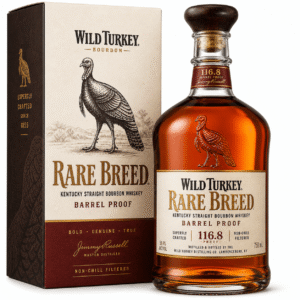
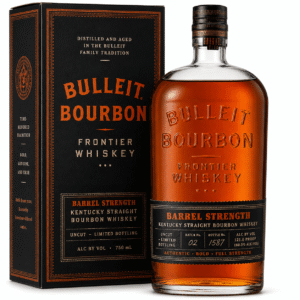
A: At 125 proof, 1792 Full Proof is bottled at a fixed maximum-entry proof rather than a variable barrel strength, distinguishing it conceptually from batch-variable barrel proof expressions. Bulleit Barrel Strength varies between 115 and 125 across batches. Wild Turkey Rare Breed varies between 112 and 116. 1792 Full Proof’s fixed 125 proof is the ceiling of the legal range — a consistent, maximum-intensity proof point that the variable expressions may or may not reach depending on the specific batch.
Q: Is this bottle sourced from an authorized distributor?
A: Yes. Every bottle in our vault is sourced exclusively through licensed, authenticated primary distribution channels. No secondary market or third-party broker sourcing is used at any point in our fulfillment process.
Q: How long will this allocation remain available?
A: High-proof expressions at this proof ceiling move consistently across collector markets. Inventory is updated in real time and no quantity holds are placed without completed checkout. We strongly recommend securing your bottle without delay.