Description
The Expression Behind the Age
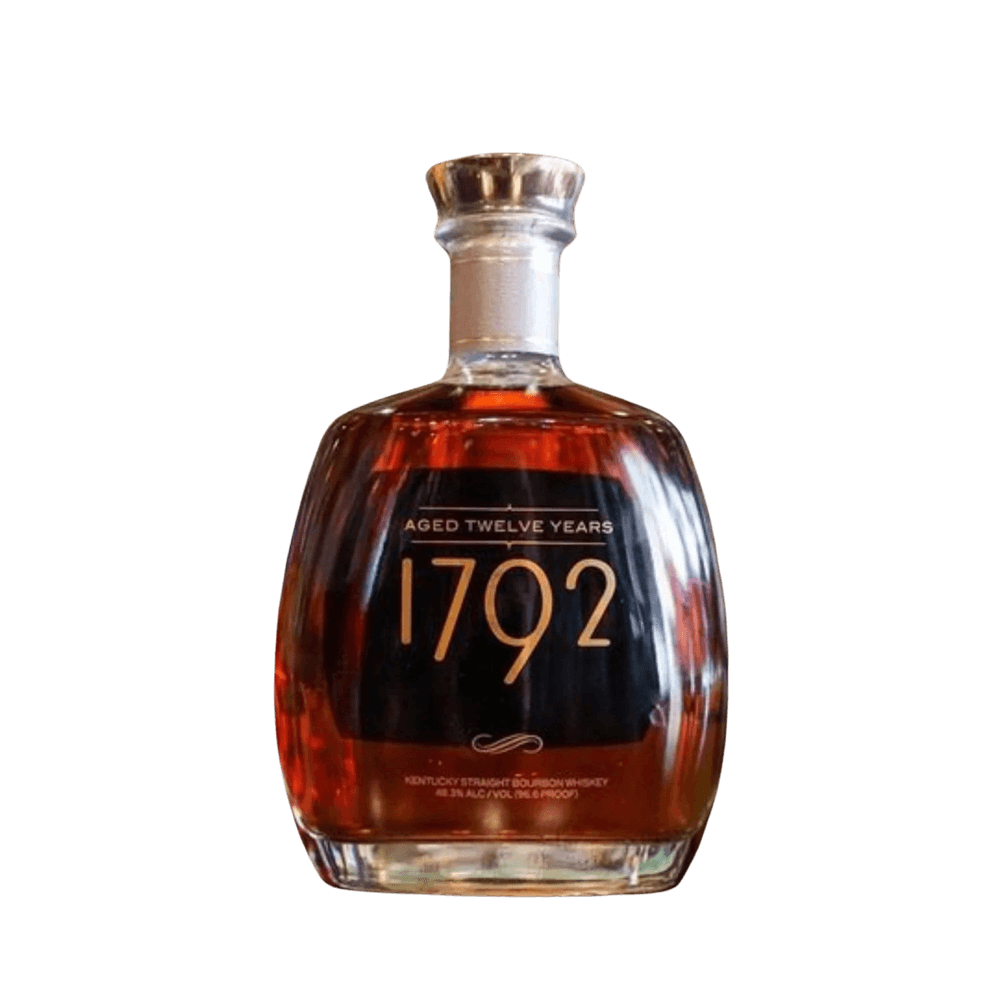
1792 12 Year Bourbon represents the maturation apex of the Barton 1792 Distillery’s core lineup — a twelve-year commitment to barrel time that produces a measurably different whiskey than any younger expression in the portfolio can deliver. Where the 1792 Full Proof showcases the distillate at maximum proof intensity, the 12 Year showcases it at maximum oak integration — a fundamentally different dimension of the same high-rye distillate.
Twelve years in Kentucky rickhouses is a meaningful threshold. It sits well above the decade that defines premium age-stated bourbons in most major portfolios, and at the outer edge of the maturation window before aggressive over-oaking becomes a production risk in Kentucky’s climate. The Barton production team’s ability to bring barrels through twelve full years without losing the high-rye character to excessive wood extraction is a genuine craft achievement.
The Barton 1792 Distillery
The Barton 1792 Distillery in Bardstown, Kentucky carries a production history stretching back to 1879 — one of the oldest continuously operating distillery sites in the United States. Under current Sazerac Company ownership, the facility has undergone significant production investment while maintaining the historical rickhouse infrastructure and limestone water access that have shaped its whiskey character for over a century.
Bardstown’s specific climate — warm summers driving aggressive oak extraction, cool winters slowing maturation to allow flavor integration — creates the precise seasonal cycling that extended maturation expressions depend on. Twelve years of that cycling at Barton’s rickhouses produces the tannin structure, dried fruit complexity, and wood integration that define this expression.
The 96.6 Proof Significance
The 96.6 proof bottling strength of 1792 12 Year is not an arbitrary or marketing-driven number. It reflects the natural alcohol concentration of the selected barrels after twelve years of maturation and evaporation — the angel’s share having reduced both volume and proof from the 125 proof barrel entry point over more than a decade of Kentucky rickhouse aging.
Bottling at natural maturation strength rather than reducing to a round-number target is a production integrity decision — one that preserves the honest character of the aged distillate without the flavor flattening that aggressive water addition before bottling can introduce. The non-round proof is, in this context, a quality signal rather than an oversight.
Tasting Profile & Sensory Architecture
The nose opens with a depth and complexity that immediately signals extended maturation — rich dark caramel, dried apricot, aged leather, and a pronounced toasted oak note that is measurably more developed than any younger 1792 expression delivers. The high-rye mash bill’s spice character is present but refined — integrated into the aromatic architecture rather than leading it.
On the palate, twelve years of barrel time produces a mid-palate weight and tannin integration that is the defining characteristic of the expression. Dark caramel, dried cherry, cinnamon bark, and a deep toasted oak structure develop deliberately through the mid-palate with a cohesion and polish that only extended maturation produces. The 96.6 proof carries the oak-derived tannins cleanly without either masking the fruit complexity or amplifying the wood to the point of bitterness. The finish is very long, dry, and structured — aged leather, dark chocolate, and refined rye spice carrying well past the swallow.
Twelve Years vs. Ten — The Maturation Difference
The two additional years that separate a twelve-year bourbon from a decade-aged expression are not proportionally equivalent to the difference between a six and an eight year. Maturation is not linear. The final years of extended barrel aging produce disproportionately significant flavor developments — deeper tannin polymerization, more complex dried fruit ester formation, and a wood integration that is qualitatively different from what the preceding decade produced.
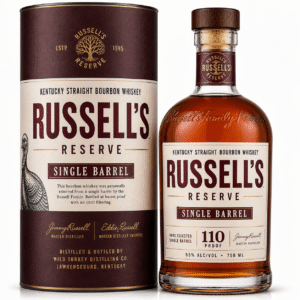
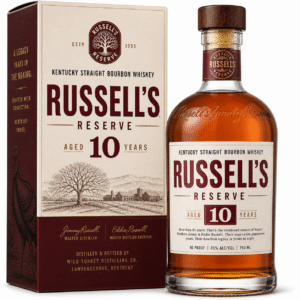
Collectors who buy 1792 12 Year Bourbon alongside decade-aged expressions from other distilleries — Eagle Rare 10 Year, Russell’s Reserve 10 Year — acquire a comparative reference point that documents precisely what two additional years of Kentucky rickhouse maturation contribute to a high-rye distillate. That comparison is one of the more instructive exercises available to a serious American whiskey student.
Age Statement Scarcity & Production Arithmetic
A verified twelve-year age statement imposes the most demanding production timeline of any standard age-stated expression in the American whiskey market. Every bottle released today was committed to barrel in 2013 or earlier — production decisions made well before the current demand environment had materialized. Those barrels represent a finite, non-renewable inventory that cannot be replenished on any timeline shorter than twelve years.
When you buy 1792 12 Year Bourbon through Allocated Bourbon Vault, you are acquiring a bottle whose scarcity is structural and permanent rather than artificially managed. Every bottle in our vault is sourced through verified primary distribution with full provenance documentation, seal integrity confirmation, and age statement label authenticity verified before dispatch.
Collection Positioning Within the 1792 Lineup
Within the Barton 1792 portfolio, the 12 Year sits at the maturation apex of the core range — above the standard 1792 Small Batch, the 1792 Sweet Wheat, the 1792 High Rye, and the 1792 Full Proof in terms of barrel time and oak-driven complexity. It is the expression that most completely documents what the Barton distillate becomes when extended maturation is prioritized above all other production variables.
For collectors building complete 1792 portfolio sets, it is the mandatory age-statement anchor — the reference point that gives every younger expression in the lineup its comparative context.
Premium Packaging & Secure Delivery Protocol
Every order fulfilled through Allocated Bourbon Vault is processed under our multi-point authentication and secure dispatch protocol. Bottles are inspected for seal integrity, label condition, and fill level before dispatch.
All shipments are packed in reinforced, spirits-grade insulated cartons with tamper-evident outer sealing. Signature-required delivery is standard on all orders. Temperature-sensitive routing is applied during summer months at no additional cost. Insurance coverage is included on every shipment up to full declared value.
Transactional Vault FAQs
Q: Why is the proof 96.6 rather than a round number like 96 or 97?
A: The 96.6 proof reflects the natural alcohol concentration of the selected barrels after twelve years of maturation and evaporation. Rather than reducing to a round-number target through water addition, the distillery bottles at the honest natural strength of the aged distillate. The non-round proof is a production integrity decision — a quality signal that the expression has not been unnecessarily adjusted for marketing convenience.
Q: How does 1792 12 Year compare to 1792 Full Proof?
A: The two expressions represent opposite dimensions of the Barton high-rye distillate. Full Proof showcases the distillate at maximum proof intensity — 125 proof, bottled at federal barrel entry strength. The 12 Year showcases the distillate at maximum oak integration — twelve years of maturation delivering tannin depth, dried fruit complexity, and wood-driven polish that the younger Full Proof cannot replicate. They are complementary rather than hierarchical.
Q: Is 1792 12 Year a limited or permanent release?
A: The 12 Year is subject to the structural supply constraints inherent to any verified twelve-year age statement — finite aged inventory that cannot be replenished on any timeline shorter than twelve years. While not marketed as a strictly limited release, availability is meaningfully constrained by production arithmetic and is not guaranteed to remain consistent across market cycles.
Q: How does 1792 12 Year compare to Eagle Rare 10 Year and Russell’s Reserve 10 Year?
A: All three are premium age-stated small batch bourbons at comparable proof points. Eagle Rare is built on Buffalo Trace’s low-rye Mash Bill #1 at 90 proof over ten years. Russell’s Reserve is built on Wild Turkey’s high-rye mash bill at 90 proof over ten years. 1792 12 Year is built on Barton’s high-rye mash bill at 96.6 proof over twelve years — delivering two additional years of maturation complexity at a slightly elevated proof point relative to both decade-aged comparators.
Q: Is this bottle sourced from an authorized distributor?
A: Yes. Every bottle in our vault is sourced exclusively through licensed, authenticated primary distribution channels. No secondary market or third-party broker sourcing is used at any point in our fulfillment process.
Q: How long will this allocation remain available?
A: Twelve-year age-stated expressions move faster than standard releases across all collector markets due to structural supply constraints. Inventory is updated in real time and no quantity holds are placed without completed checkout. We strongly recommend securing your bottle without delay.