Description
The Distillery Behind the Bottle
Maker’s Mark has operated from Star Hill Farm in Loretto, Kentucky since 1953 — a National Historic Landmark distillery that pioneered the wheated bourbon category and permanently altered the trajectory of American whiskey production. Founded by Bill Samuels Sr., the distillery was built on a single deliberate departure from convention: replacing rye with red winter wheat as the secondary grain in the mash bill.
That founding decision produced a softer, rounder bourbon that stood apart from every other Kentucky expression of the era. Over seven decades later, the original recipe remains fully intact under the stewardship of Rob Samuels and Master Distiller Greg Davis — unchanged in grain bill, proof, and production philosophy since the first bottle left Star Hill Farm.
The Wheated Mash Bill & Its Significance
The wheated mash bill category — now anchored by some of the most coveted allocated expressions in American whiskey, including Pappy Van Winkle and W.L. Weller — owes its commercial existence to Maker’s Mark. Bill Samuels Sr. tested multiple grain combinations before selecting red winter wheat specifically for its ability to produce a measurably softer congener profile than rye.
Wheat as a secondary grain produces less of the harsh fusel alcohols and sharp spice compounds that rye contributes, resulting in a bourbon where caramel sweetness, vanilla, and gentle fruit notes define the palate rather than pepper and grain spice. That flavor profile has driven the wheated category’s sustained demand growth across the past two decades and established Maker’s Mark as its most recognized and widely distributed standard-bearer.
Tasting Profile & Sensory Architecture
The nose opens with warm caramel, fresh vanilla, and a gentle floral note — the Maker’s Mark house profile immediately recognizable and distinctly softer than any rye-forward expression at comparable proof. A subtle toasted oak undercurrent develops as the glass opens up.
On the palate, the wheated mash bill expresses itself clearly — soft butterscotch, brown sugar, ripe stone fruit, and a light baking spice note that adds complexity without the assertiveness that rye grain introduces. The 90 proof delivers this profile with a balance that prioritizes approachability without sacrificing the structure needed for a finish of meaningful length. The finish is smooth, moderately long, and defined by lingering caramel sweetness and a whisper of toasted oak that fades slowly and cleanly.
The Hand-Dipped Red Wax Seal
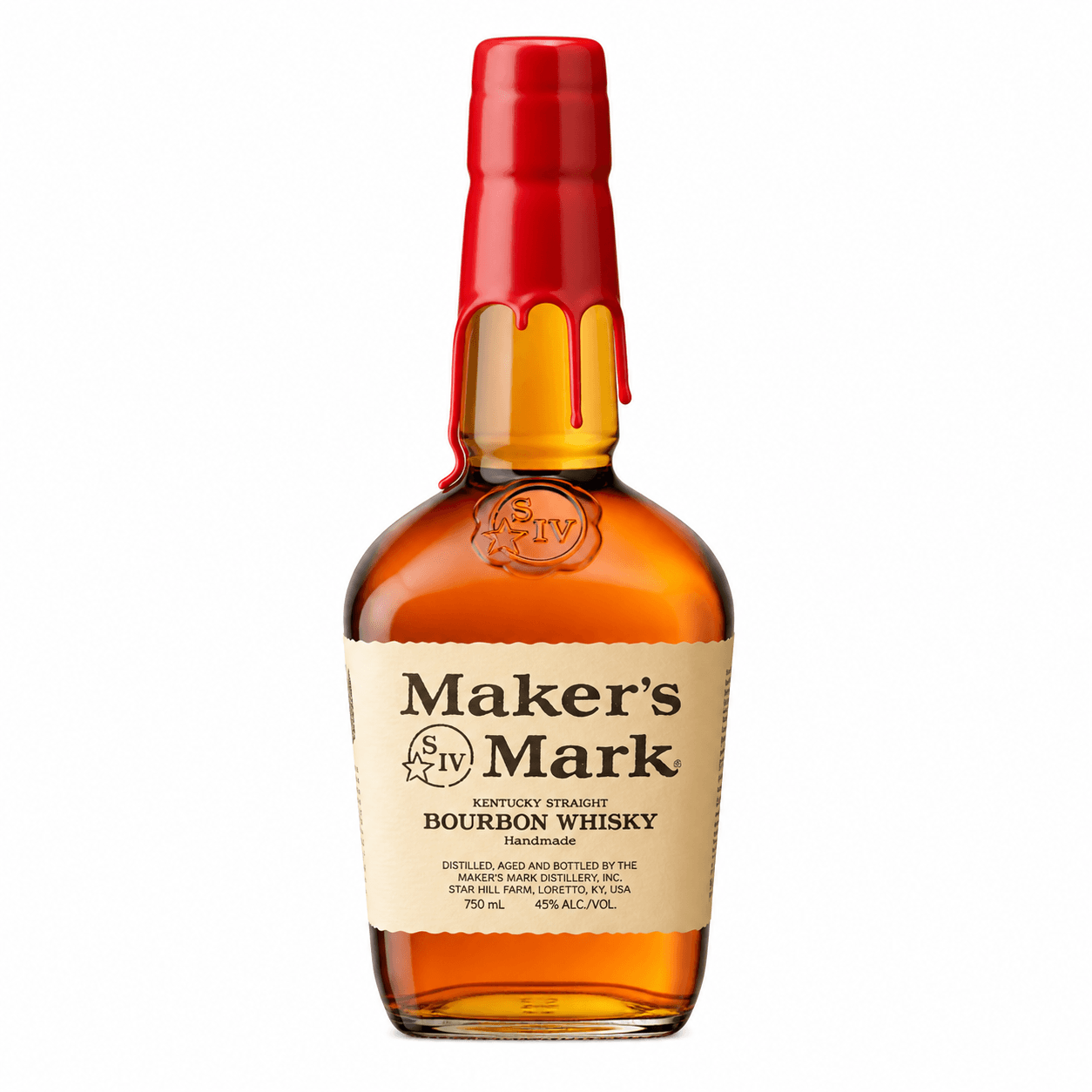
The hand-dipped red wax seal that caps every Maker’s Mark bottle is not decorative packaging — it is a registered trademark and a production practice that has been performed by hand at Star Hill Farm since the distillery’s founding. Each bottle is individually dipped by hand into the distillery’s signature red wax, producing a unique wax pattern on every bottle.
That individualized sealing process is one of the most recognizable packaging practices in the American spirits industry and a direct expression of the artisanal production philosophy that Maker’s Mark has maintained through every stage of its growth from small regional distillery to globally distributed brand. The wax seal integrity is verified on every bottle processed through our vault.
The Barrel Rotation Program
Every barrel of Maker’s Mark bourbon is physically rotated by hand within the distillery’s rickhouses during maturation — moved from upper to lower floors to ensure even exposure to the temperature fluctuations that drive oak extraction and flavor development. This is an exceptionally labor-intensive practice that almost no other major American distillery still performs at scale.
The practical consequence is a more consistent maturation outcome across the barrel inventory than standard gravity-fed rickhouse systems produce. When collectors buy Maker’s Mark Bourbon through Allocated Bourbon Vault, that rotational consistency is part of the quality infrastructure behind every bottle — a production discipline invisible on the label but present in every pour.
Category Position & Comparative Value
Within the 90 proof wheated bourbon segment, Maker’s Mark occupies a specific position that no other expression precisely replicates — the original wheated formula, at the distillery that invented the category, at a price point that remains accessible relative to its wheated competitors. W.L. Weller expressions share the category but face significantly greater allocation pressure. Pappy Van Winkle shares the grain philosophy but sits at a price tier that removes it from everyday consideration.
Maker’s Mark delivers the founding wheated bourbon character without the scarcity premium that its most coveted wheated stablemates command. For collectors building comprehensive wheated bourbon comparative sets, it is the mandatory baseline — the expression against which every other wheated bourbon’s deviation from the original formula is measured.
Premium Packaging & Secure Delivery Protocol
Every order fulfilled through Allocated Bourbon Vault is processed under our multi-point authentication and secure dispatch protocol. Bottles are inspected for seal integrity — including the signature hand-dipped red wax seal — label condition, and fill level before dispatch.
All shipments are packed in reinforced, spirits-grade insulated cartons with tamper-evident outer sealing. Signature-required delivery is standard on all orders. Temperature-sensitive routing is applied during summer months at no additional cost. Insurance coverage is included on every shipment up to full declared value.
Transactional Vault FAQs
Q: What makes Maker’s Mark a wheated bourbon?
A: Maker’s Mark replaces rye with red winter wheat as the secondary grain in its mash bill. That substitution produces a measurably softer congener profile — less sharp fusel alcohol and spice compound development — resulting in the caramel sweetness, gentle vanilla, and smooth finish that define the wheated bourbon category Maker’s Mark founded in 1953.
Q: Has the Maker’s Mark recipe changed since its founding?
A: No. The original red winter wheat mash bill, 90 proof bottling strength, and core production philosophy established by Bill Samuels Sr. in 1953 remain fully intact. Maker’s Mark is one of the only major American bourbon brands that can credibly claim an unchanged recipe across more than seven decades of continuous production.
Q: Why is the red wax seal on every bottle different?
A: Each bottle is individually hand-dipped into the distillery’s signature red wax at Star Hill Farm, producing a unique drip pattern on every bottle. The hand-dipping process is a registered trademark practice that Maker’s Mark has performed since founding — a genuine artisanal production step at a distillery scale that makes it operationally exceptional in the industry.
Q: How does Maker’s Mark compare to Maker’s Mark 101?
A: Both expressions share the identical red winter wheat mash bill. The 101 expression is bottled at 101 proof — eleven proof points higher than the standard 90 proof expression — delivering noticeably more mid-palate weight, amplified oak and caramel notes, and a longer, more structured finish. The standard 90 proof expression prioritizes approachability and softness; the 101 prioritizes proof-driven complexity within the same wheated flavor framework.
Q: Is this bottle sourced from an authorized distributor?
A: Yes. Every bottle in our vault is sourced exclusively through licensed, authenticated primary distribution channels. No secondary market or third-party broker sourcing is used at any point in our fulfillment process.
Q: How long will this allocation remain available?
A: Inventory is updated in real time and no quantity holds are placed without completed checkout. We recommend securing your bottle without delay.