Description
The Expression Behind the Proof
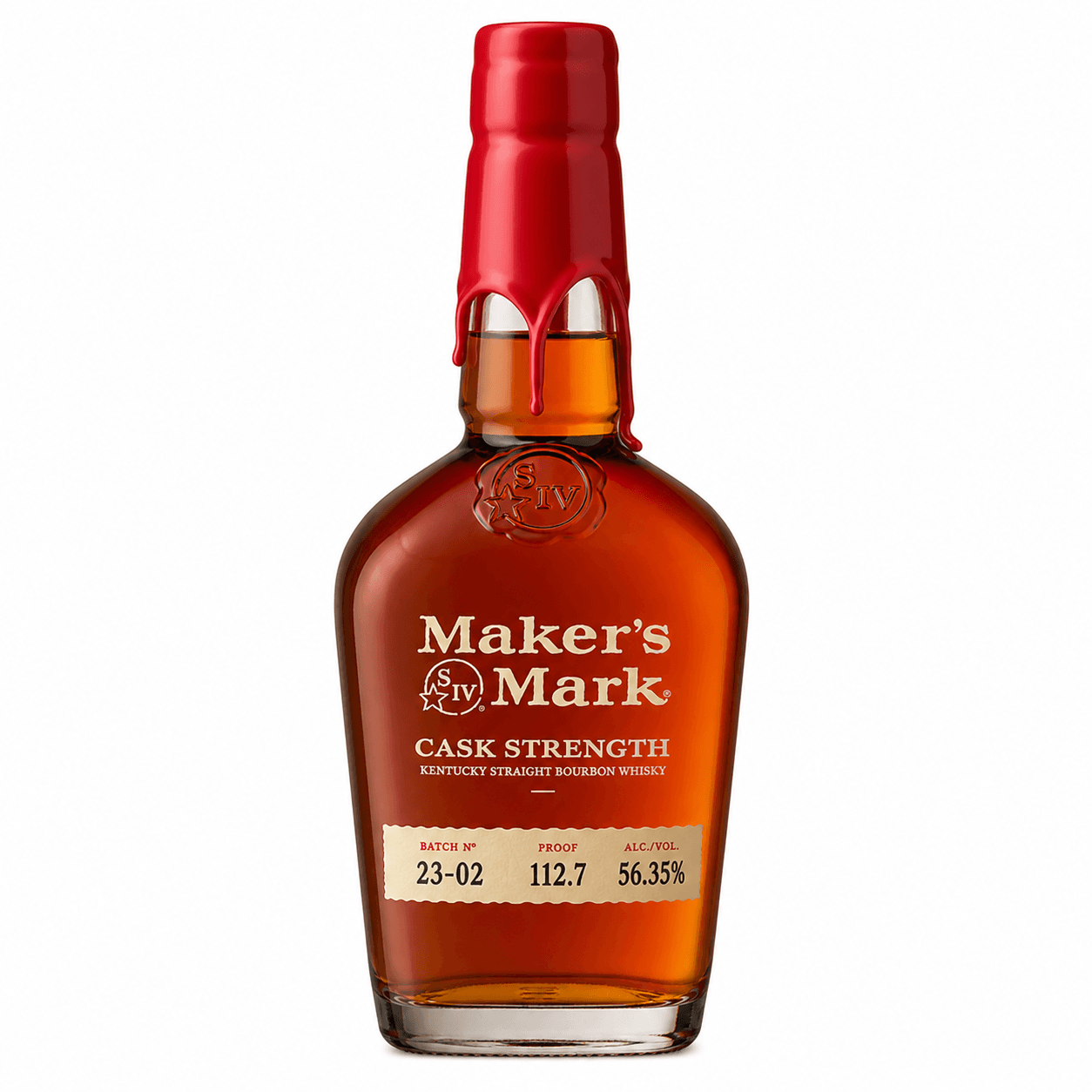
Maker’s Mark Cask Strength represents the wheated bourbon category’s most direct answer to the barrel proof movement that has driven significant collector interest across the American whiskey market. The same red winter wheat mash bill, the same Star Hill Farm distillate, the same rotated rickhouse maturation — bottled without the water addition that brings every other expression in the Maker’s lineup to a fixed proof target.
What arrives in the bottle is the wheated distillate exactly as it exists at the moment of barrel dumping. Proof varies between 108 and 114 across batches, reflecting the natural evaporation dynamics of each specific batch’s barrel pool. That variation is the honest consequence of genuine cask strength bottling — not a production inconsistency.
Why Cask Strength Matters for Wheated Bourbons
The cask strength format produces different results across different mash bill categories — and the wheated category benefits from it in a specific and particularly compelling way. High-rye and high-corn expressions at cask strength deliver amplified spice and grain intensity respectively. Wheated expressions at cask strength deliver something rarer — an amplified softness and texture richness that the category’s lower-proof expressions hint at but cannot fully realize.
At 108–114 proof, the red winter wheat mash bill’s characteristic caramel, vanilla, and stone fruit notes are not simply louder versions of the standard expression. They are more layered, more coating on the palate, and more persistent on the finish — flavor dimensions that exist in the standard Maker’s Mark but are compressed by the water addition required to reach 90 proof. Removing that water reveals the full expression of what the wheated distillate actually contains.
Tasting Profile & Sensory Architecture
The nose opens with a concentrated richness that immediately signals the elevated proof — dark caramel, baked vanilla, toasted oak, and a subtle dried stone fruit note that is more pronounced than any standard Maker’s expression delivers. The wheated softness is still present and identifiable, but amplified to a depth that the lower-proof expressions cannot achieve.
On the palate, the cask strength delivers an immediately full-weight, coating texture — the defining characteristic of wheated bourbons at this proof range. Brown sugar, butterscotch, ripe peach, and a caramelized oak note develop through the mid-palate with a richness and persistence that rewards slow sipping. The finish is long, warm, and defined by lingering caramel sweetness, vanilla bean, and a structured toasted oak fade that carries well past the swallow — significantly longer than the standard Maker’s finish at 90 proof.
Batch Variation & Collection Strategy
Proof varies between 108 and 114 across batches, and that variation produces meaningfully different drinking experiences across acquisitions. Higher-proof batches within the range deliver maximum texture intensity and concentration. Lower-proof batches tend toward slightly more integrated oak and fruit development relative to the alcohol presence — a profile that some tasters find more immediately accessible without water addition.
Tracking batch numbers across acquisitions is a legitimate collection strategy for this expression. Collectors who buy Maker’s Mark Cask Strength across multiple batch releases build a genuinely variable set — each bottle a specific document of the barrel pool available at that production moment, and a distinct data point in the ongoing study of what the Maker’s Mark wheated distillate produces without proof adjustment.
The Water Addition Decision
At 108–114 proof, Maker’s Mark Cask Strength is one of the few wheated bourbon expressions where measured water addition is actively recommended rather than simply tolerated. A small addition of still water — typically 5–10ml per standard pour depending on the specific batch proof — disrupts ethanol-flavor compound bonds and releases aromatic complexity that high alcohol concentration suppresses in wheated expressions specifically.
The caramel and vanilla compounds that define the Maker’s Mark house character are particularly responsive to water addition at cask strength. Many serious tasters find the expression reveals its most complete and balanced profile at a personal proof preference somewhere between neat and a modest water addition — a calibration that makes each bottle a slightly personalized experience.
Comparative Position Within the Maker’s Mark Lineup
Within the Maker’s Mark core and extended lineup, Cask Strength sits at the proof apex — above the standard 90 proof Kentucky Straight Bourbon, the 94 proof Maker’s 46, and the 101 proof Maker’s Mark 101 in terms of proof intensity and uncut distillate concentration. It delivers the wheated mash bill character at its maximum natural expression across all standard Maker’s expressions.
For collectors building complete Maker’s Mark portfolio sets, Cask Strength is the mandatory proof ceiling reference — the expression that documents what the Star Hill Farm wheated distillate produces when no proof adjustment stands between the barrel and the bottle. That documentation is irreplaceable within the lineup and provides essential comparative context for every lower-proof Maker’s expression.
Premium Packaging & Secure Delivery Protocol
Every order fulfilled through Allocated Bourbon Vault is processed under our multi-point authentication and secure dispatch protocol. Bottles are inspected for seal integrity — including the signature Maker’s Mark hand-dipped red wax seal — label condition, batch number verification, and fill level before dispatch.
All shipments are packed in reinforced, spirits-grade insulated cartons with tamper-evident outer sealing. Signature-required delivery is standard on all orders. Temperature-sensitive routing is applied during summer months at no additional cost. Insurance coverage is included on every shipment up to full declared value.
Transactional Vault FAQs
Q: Why does the proof vary between 108 and 114 across batches?
A: Proof variation in cask strength expressions directly reflects each batch’s specific barrel pool evaporation dynamics. Because no two barrels — and no two batch selections — lose the same volume of liquid and alcohol to the angel’s share over their maturation periods, each batch arrives at bottling with a distinct natural proof concentration. Variation is evidence of genuine cask strength bottling, not inconsistency in production standards.
Q: How does Maker’s Mark Cask Strength differ from the standard Maker’s Mark 90 proof?
A: The standard Maker’s Mark is reduced to 90 proof through water addition before bottling — a controlled process that produces consistent proof across every bottle. Cask Strength skips that reduction entirely, bottling the wheated distillate at its natural barrel concentration of 108–114 proof. The result is greater texture richness, deeper flavor concentration, more pronounced mid-palate weight, and a significantly longer finish compared to the standard expression.
Q: Should Maker’s Mark Cask Strength be consumed neat or with water?
A: Both approaches are valid, but measured water addition is actively recommended for most tasting contexts at this proof range. A small addition of still water — typically 5–10ml per pour — releases aromatic and flavor complexity that high alcohol concentration suppresses, particularly in wheated expressions where caramel and vanilla compounds respond well to controlled dilution. Finding a personal proof preference through incremental water addition is standard practice.
Q: How does Maker’s Mark Cask Strength compare to Maker’s Mark 101?
A: Maker’s Mark 101 is reduced to a fixed 101 proof through water addition — a consistent, controlled bottling that delivers amplified Maker’s character relative to the standard expression. Cask Strength is bottled without reduction at 108–114 proof, delivering greater intensity, batch-to-batch variation, and the full uncut wheated distillate character that the 101’s proof adjustment partially moderates. The two expressions represent different philosophies — consistency versus maximum natural concentration.
Q: Is the batch number documented on the label?
A: Batch identification details are printed on Maker’s Mark Cask Strength bottles. Contact our allocation desk for specific batch number and proof point documentation on current vault inventory before completing your purchase if batch-specific acquisition is a priority for your collection.
Q: How long will this allocation remain available?
A: Cask strength wheated expressions at this proof range and brand recognition move consistently across collector markets. Inventory is updated in real time and no quantity holds are placed without completed checkout. We strongly recommend securing your bottle without delay.