Description
The Distillery Behind the Expression
The Barton 1792 Distillery in Bardstown, Kentucky carries a production history stretching back to 1879 — one of the oldest continuously operating distillery sites in the United States and a facility whose current Sazerac Company ownership has invested significantly in production modernization while preserving the historical rickhouse infrastructure and limestone water access that have shaped the distillery’s whiskey character for over a century.
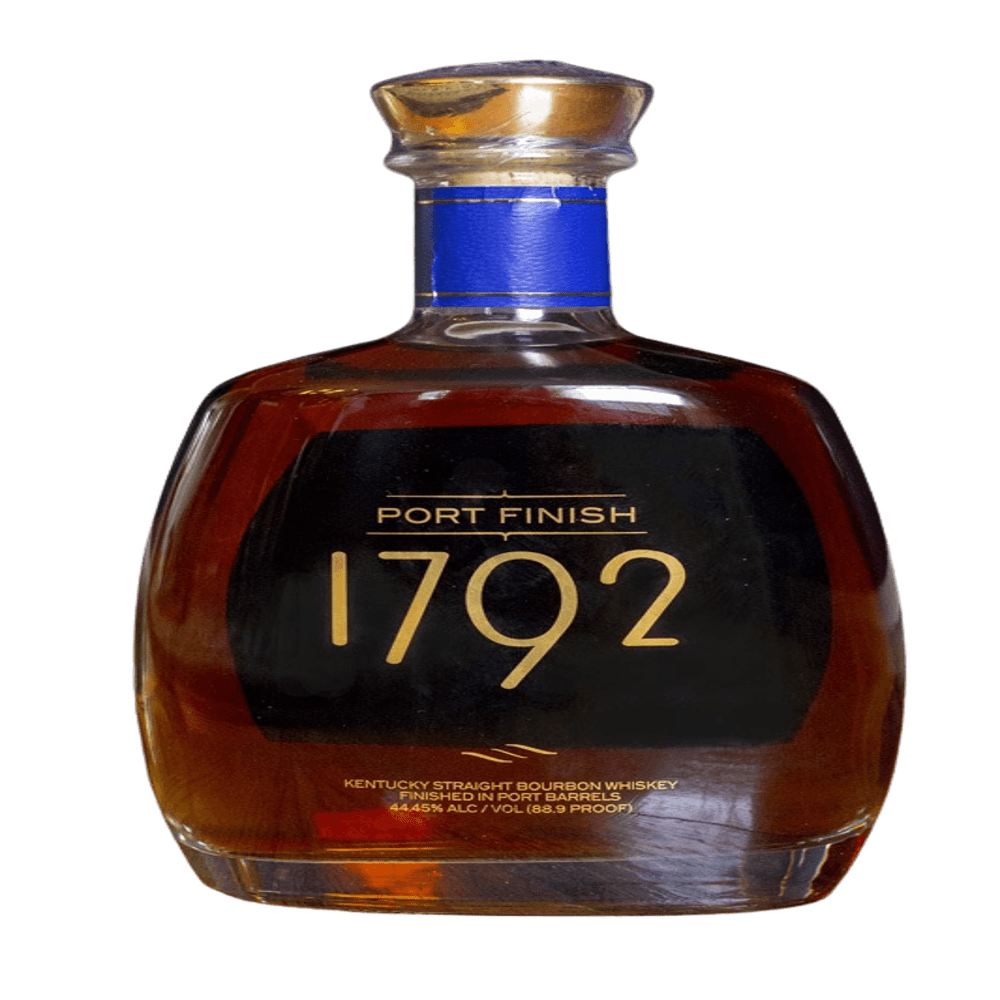
Bardstown’s designation as the Bourbon Capital of the World provides the geographic and climatic context that defines every expression produced there — the region’s specific limestone-filtered water, seasonal temperature cycling, and rickhouse construction traditions producing a maturation environment that the 1792 Special Finish Collection’s secondary cask program builds directly upon. The Port Finish expression represents one of the most fruit-forward departures from the distillery’s high-rye core character within that collection.
The Special Finish Collection Context
The 1792 Special Finish Collection is Barton’s ongoing program of secondary cask-finished expressions — each taking fully mature 1792 high-rye mash bill bourbon as its foundation and subjecting it to a secondary maturation period in a specific wine or spirit cask type. The collection includes expressions finished in Port, Sweet Wheat, and other cask formats — each designed to demonstrate what a specific secondary wood and residual liquid interaction adds to the distillery’s established high-rye distillate character.
The Port Finish expression is the most fruit-forward and internationally referenced of the collection — drawing on the centuries-old tradition of Port wine cask finishing that the Scotch whisky industry pioneered and that American whiskey producers have increasingly adopted as a finishing tool for its dramatic and immediately identifiable flavor contribution. At 96.6 proof — the same natural maturation strength applied to the 1792 12 Year expression — the Port Finish signals the same production integrity decision: bottling at honest barrel concentration rather than reducing to a round-number marketing target.
What Port Wine Barrel Finishing Actually Does
Port wine barrels used in spirit finishing are not simply empty oak containers — they are casks that have held genuine Port wine, typically for multiple years of wine maturation, and that retain significant residual Port wine absorbed into the wood’s porous structure before the bourbon is introduced for secondary maturation. When mature bourbon enters those casks, the residual Port wine compounds begin a new interaction with the spirit — extracting into the bourbon over the secondary maturation period.
That extraction introduces flavor compounds that Kentucky bourbon’s primary maturation in new charred American white oak cannot produce — dark berry concentration from the Douro Valley grape varieties used in Port production, dried fruit richness from Port’s fortification and oxidative aging history, and a subtle tannic structure from the Port wine’s own grape-derived tannins that is meaningfully different from the wood-derived tannins of the primary barrel. The result is a bourbon whose flavor architecture is genuinely expanded rather than simply sweetened by the finishing process.
Tasting Profile & Sensory Architecture
The nose opens with an immediately distinctive aromatic profile that announces the Port cask influence without ambiguity — dark cherry, blackberry preserve, and a dried plum note lead, layered over the familiar 1792 high-rye foundation of caramel, baking spice, and toasted oak. The Port wine residual contributes a subtle fortified wine character — a faint raisin and dark fruit concentration that adds depth without overwhelming the bourbon identity beneath it.
On the palate, the Port finish delivers its most significant contribution through mid-palate fruit richness and texture. Dark berry, dried cherry, and a concentrated grape character develop through the mid-palate alongside the high-rye mash bill’s characteristic cracked pepper and cinnamon spice — the two flavor profiles interacting rather than competing, each amplifying dimensions of the other that neither produces in isolation. The 96.6 proof provides the structural backbone to carry both the Port-derived fruit concentration and the rye spice character cleanly through to the finish. The finish is long, fruit-forward, and warm — dark cherry, dark chocolate, and a lingering Port wine richness carrying well past the swallow with a complexity that primary maturation alone cannot produce.
The Interaction Between High-Rye Character and Port Finish
The decision to apply Port cask finishing to a high-rye mash bill distillate — rather than a wheated or low-rye bourbon — produces a specific and distinctive flavor interaction that distinguishes the 1792 Port Finish from the majority of Port-finished American whiskey expressions. Port wine’s dark berry concentration and dried fruit richness contrast with the high-rye mash bill’s dry spice character in a way that wheated bourbon’s soft caramel profile does not — the rye spice providing a structural counterpoint to the Port fruit that keeps the finished expression from reading as simply sweet or fruit-dominated.
The result is a more complex and layered interaction between the finishing cask and the base distillate than Port cask finishing applied to softer, sweeter mash bill bourbons typically produces. Collectors who buy 1792 Port Finish Bourbon through Allocated Bourbon Vault are acquiring a bottle where the finishing cask and the mash bill work in deliberate creative tension rather than simple flavor alignment.
Port Wine’s Flavor Contribution — A Reference Framework
For collectors approaching Port cask-finished bourbon without an established Port wine reference point, understanding what genuine Port wine contributes as a cask finishing medium requires some category context. Port is a fortified wine produced in Portugal’s Douro Valley — grapes fermented partially before fortification with grape spirit arrests fermentation, preserving residual sugar and dark fruit concentration that extended maturation in wood then develops into the dried fruit, chocolate, and leather complexity of mature vintage or tawny Port styles.
The residual Port wine compounds absorbed into finishing cask wood during Port wine maturation carry those flavor characteristics — dark berry, dried fruit, fortified wine richness — into the bourbon during secondary maturation contact. The intensity of that contribution varies with the cask’s Port wine history, the secondary maturation duration, and the ambient temperature cycling during the finishing period. In the 1792 program, the finishing duration and cask selection are calibrated to deliver a meaningful Port contribution without erasing the high-rye distillate character that defines the 1792 production identity.
Collection Positioning Within the 1792 Special Finish Collection
Within the Barton 1792 Special Finish Collection, the Port Finish occupies the most internationally fruit-forward position — drawing on a finishing cask tradition with centuries of precedent in the global spirits industry and delivering the most immediately identifiable secondary cask flavor contribution of any expression in the collection. It sits alongside the Sweet Wheat and other finish variants as a flavor departure from the core 1792 lineup expressions — the Full Proof, the Small Batch, the High Rye, and the 12 Year — rather than a maturation evolution of them.
For collectors building complete 1792 portfolio sets, the Port Finish is the essential secondary cask reference point — the expression that documents what genuine Port wine barrel finishing adds to the Barton high-rye distillate when the finishing program is applied with the production discipline and natural proof integrity that the 96.6 bottling strength signals.
Premium Packaging & Secure Delivery Protocol
Every order fulfilled through Allocated Bourbon Vault is processed under our multi-point authentication and secure dispatch protocol. Bottles are inspected for seal integrity, label condition, and fill level before dispatch.
All shipments are packed in reinforced, spirits-grade insulated cartons with tamper-evident outer sealing. Signature-required delivery is standard on all orders. Temperature-sensitive routing is applied during summer months at no additional cost. Insurance coverage is included on every shipment up to full declared value.
Transactional Vault FAQs
Q: What does Port wine barrel finishing actually contribute to bourbon flavor?
A: Port wine barrels retain significant residual Port wine compounds absorbed into the wood’s porous structure during wine maturation. When mature bourbon enters those casks for secondary maturation, those compounds extract into the spirit — introducing dark berry concentration, dried fruit richness, and a subtle grape-derived tannic structure that primary maturation in new charred American white oak cannot produce. The result is a bourbon whose flavor architecture is genuinely expanded by the finishing process rather than simply sweetened by added flavoring.
Q: Why is 1792 Port Finish bottled at 96.6 proof rather than a round number?
A: The 96.6 proof reflects the natural alcohol concentration of the selected barrels after primary maturation and Port wine cask finishing — the same production integrity decision applied to the 1792 12 Year expression. Rather than reducing to a round-number marketing target through water addition, the distillery bottles at the honest natural strength of the finished distillate. The non-round proof is a quality signal that the expression has not been adjusted for marketing convenience at the expense of flavor integrity.
Q: How does Port cask finishing interact with the 1792 high-rye mash bill specifically?
A: The high-rye mash bill’s dry spice character — cracked pepper, cinnamon, and grain complexity — provides a structural counterpoint to the Port wine’s dark berry concentration and fruit richness that wheated or low-rye bourbon profiles do not. Rather than simply sweetening a soft base distillate, the Port cask finishing creates a dynamic interaction with the rye spice structure — the two flavor profiles working in creative tension that produces more layered complexity than Port finishing applied to softer mash bill bourbons typically achieves.
Q: Is 1792 Port Finish a permanent release or a limited expression?
A: The 1792 Port Finish is part of the Special Finish Collection — a series of finishing expressions that Barton releases in controlled quantities rather than as permanent core lineup additions. Availability varies by market and release cycle. The non-round 96.6 proof bottling and the genuine Port wine barrel sourcing impose natural production constraints that prevent unlimited scaling of the program regardless of demand.
Q: How does 1792 Port Finish compare to other Port-finished American whiskey expressions?
A: The primary distinguishing factors are the high-rye mash bill foundation and the natural 96.6 proof bottling strength. Most Port-finished American whiskey expressions are built on wheated or low-rye bourbon bases — producing a sweeter, softer interaction with the Port cask influence. The 1792’s high-rye character creates a more complex tension with the Port fruit contribution, and the non-round proof signals a production integrity commitment that round-number bottled finishing expressions may not apply.
Q: How long will this allocation remain available?
A: Special Finish Collection expressions move consistently across collector markets due to their finishing cask specificity and limited production quantities. Inventory is updated in real time and no quantity holds are placed without completed checkout. We strongly recommend securing your bottle without delay.