Description
The Producer Behind the Bottle
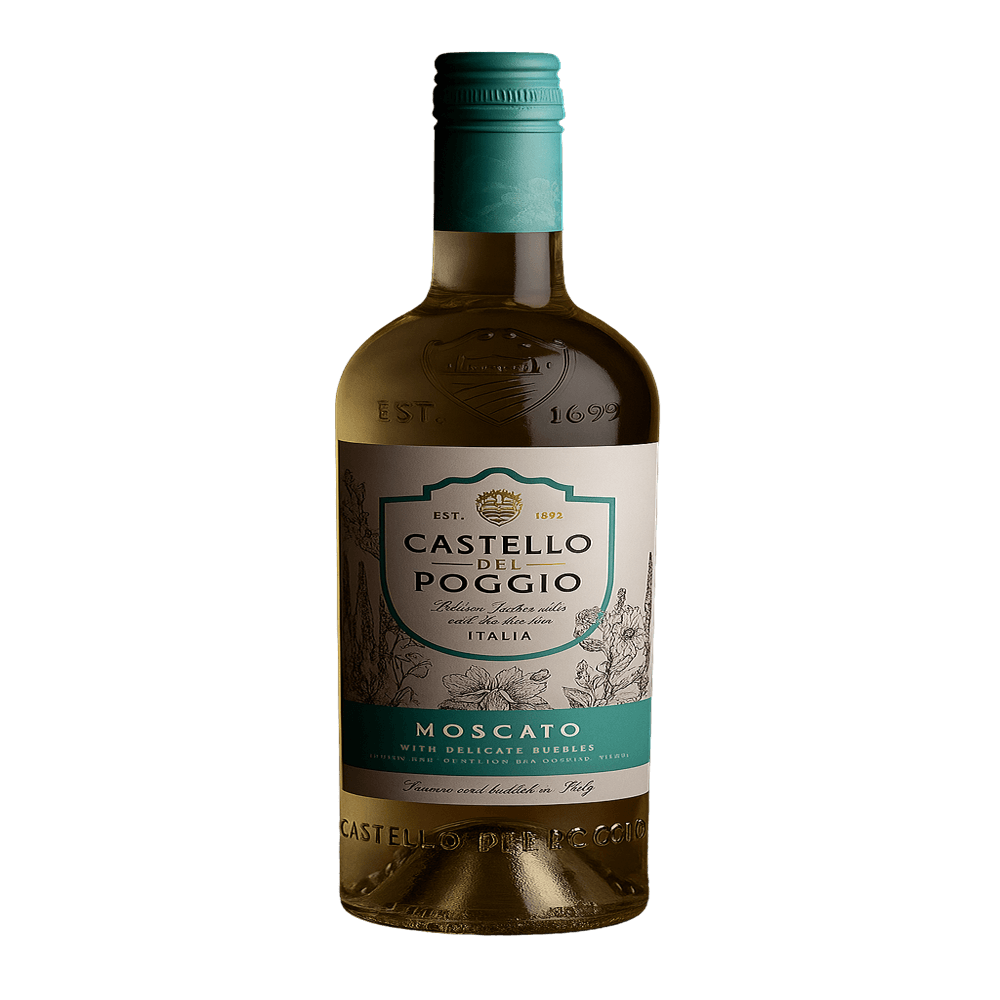
Castello del Poggio is one of Piedmont’s most recognized Moscato specialists — a brand built on the hillside vineyards of the Asti zone where the Moscato Bianco grape has been cultivated for centuries and the Moscato d’Asti and Asti Spumante denominations have established Italy’s most celebrated sweet white wine tradition. The Castello del Poggio estate sits within this historic production zone, drawing from sun-facing hillside parcels that maximize aromatic development in the Moscato Bianco variety.
The brand operates under the Santa Margherita Group — one of Italy’s most significant premium wine portfolio companies — bringing production infrastructure and quality control standards to its Piedmont operations that smaller independent producers cannot consistently match. That institutional backing has made Castello del Poggio one of the most reliably consistent and widely distributed Moscato expressions in the American import market.
The Moscato Bianco Grape & Piedmont Terroir
Moscato Bianco — known in France as Muscat Blanc à Petits Grains — is one of the oldest cultivated grape varieties in the world and the exclusive grape behind the Moscato d’Asti and Asti Spumante denominations. In Piedmont’s Asti zone, the variety finds its most celebrated expression — the combination of the region’s calcareous clay soils, south-facing hillside exposures, and the specific microclimate created by the Apennine mountain barrier produces an aromatic intensity and natural sweetness in the Moscato Bianco grape that no other region reliably replicates.
The grape’s naturally high sugar content and intensely aromatic profile make it ideally suited to the low-alcohol, lightly sparkling production style that defines the category. Fermentation is arrested before completion — preserving the natural grape sugars and the variety’s primary fruit and floral aromatics in the finished wine rather than converting them entirely to alcohol.
The Production Method & Low Alcohol Result
The 7% ABV of Castello del Poggio Moscato is not a reduction or a dilution — it is the natural consequence of arrested fermentation, the production technique that defines the Moscato d’Asti style. Fermentation begins in pressurized tanks, converting a portion of the Moscato Bianco’s natural grape sugar to alcohol before the winemaker arrests the process by chilling the fermenting must to below the temperature at which yeast remain active.
The result is a wine that retains both significant residual sugar and the natural carbonic pressure developed during fermentation — producing the characteristic gentle effervescence without secondary fermentation or added carbonation. At 7% ABV, the wine delivers the full aromatic and flavor complexity of the Moscato Bianco grape without the alcohol weight that suppresses the variety’s delicate floral character in higher-ABV formats.
Tasting Profile & Sensory Architecture
The nose opens with an immediately expressive and inviting aromatic profile — fresh white peach, ripe apricot, orange blossom, and a distinctive honey note that is the Moscato Bianco signature across every serious expression of the variety. A subtle lemon zest and light floral character develop behind the primary fruit aromatics.
On the palate, the gentle effervescence lifts the sweetness and prevents the residual sugar from reading as heavy or cloying. Fresh peach, mandarin, and a light apricot preserve note lead through the mid-palate with a texture that is soft, light-bodied, and immediately pleasurable. The 7% ABV contributes just enough structure to carry the fruit flavors without introducing any of the alcohol warmth that would disrupt the delicate aromatic character. The finish is clean, moderately sweet, and defined by lingering peach and orange blossom — refreshing rather than rich, and inviting a second pour rather than demanding contemplation.
Serving Occasions & Pairing Versatility
Castello del Poggio Moscato performs across a wider range of serving occasions than its sweet wine classification might suggest. At 7% ABV, it is one of the most genuinely sessionable wine expressions available at any price point — lower in alcohol than most table wines, sweeter than most sparkling wines, and more aromatically expressive than most low-ABV alternatives.
As a standalone aperitivo pour served well-chilled, it functions as an immediately crowd-pleasing social wine without the formality or acquired taste barrier of drier sparkling wine styles. Paired with fresh fruit desserts, light pastries, or soft cheeses, the residual sugar and effervescence complement rather than compete with the food’s sweetness. It also performs well alongside moderately spiced Asian cuisine — the sweetness tempering heat in a way that drier wines cannot.
Gift Market Positioning & Broad Appeal
Few wine expressions cross demographic and occasion boundaries as effectively as a well-made Moscato at an accessible price point. Castello del Poggio delivers recognized Italian regional provenance, immediate aromatic appeal, and a low alcohol format that makes it suitable for recipients across a wide range of wine experience levels and personal preferences.
When you buy Castello del Poggio Moscato through Allocated Bourbon Vault, you acquire a bottle that performs equally as a personal everyday pour, a casual entertaining wine, and a thoughtful gift choice for recipients who may not have established preferences in the broader wine category. Its broad accessibility does not come at the expense of genuine quality — the Piedmont terroir and Moscato Bianco variety deliver real regional character that distinguishes it from generic sweet wine alternatives.
Storage & Serving Protocol
Unlike many wines that benefit from extended cellaring, Castello del Poggio Moscato is designed for consumption within one to three years of vintage — the fresh primary fruit and floral aromatics that define the style are at their most vibrant in the wine’s youth and diminish with extended bottle age. Store unopened bottles in a cool, dark environment at approximately 10–14°C away from light and vibration.
Serve well-chilled at 6–8°C — cold enough to preserve the aromatic clarity and enhance the refreshing effervescence that defines the style. Once opened, consume within one to two days under refrigeration with a wine stopper to preserve residual carbonation.
Premium Packaging & Secure Delivery Protocol
Every order fulfilled through Allocated Bourbon Vault is processed under our multi-point authentication and secure dispatch protocol. Castello del Poggio Moscato bottles are inspected for cork or closure integrity, label condition, and fill level before dispatch.
All shipments are packed in reinforced, temperature-controlled cartons with tamper-evident outer sealing. Signature-required delivery is standard on all orders. Cold-chain routing is applied where seasonal ambient temperatures require it. Insurance coverage is included on every shipment up to full declared value.
Transactional Vault FAQs
Q: Is Castello del Poggio Moscato the same as Moscato d’Asti DOCG?
A: Castello del Poggio Moscato is produced in the Asti zone of Piedmont using the same Moscato Bianco grape and arrested fermentation method that defines the Moscato d’Asti DOCG style. Specific DOCG designation details vary by release and are confirmed on the label. The production philosophy, regional provenance, and grape variety are consistent with the Moscato d’Asti category regardless of specific label designation on individual releases.
Q: Why is the alcohol content only 7%?
A: The 7% ABV is the natural result of arrested fermentation — the production technique that defines the Moscato d’Asti style. Fermentation is stopped before completion by chilling the fermenting must, preserving both residual grape sugar and the natural carbonation developed during fermentation. The result is a wine with genuine sweetness, gentle effervescence, and low alcohol — all arising naturally from the production method rather than through dilution or sugar addition.
Q: How sweet is Castello del Poggio Moscato compared to other sweet wines?
A: Castello del Poggio Moscato is meaningfully sweeter than demi-sec sparkling wines and most off-dry white wines, but significantly less concentrated in sweetness than dessert wines like Sauternes or Tokaji Aszú. The effervescence and Furmint’s natural acidity — here replaced by Moscato Bianco’s fruit-forward profile — balance the residual sugar to produce a sweetness that reads as fresh and fruity rather than heavy or syrupy.
Q: Should Castello del Poggio Moscato be cellared or consumed young?
A: Consumed young. The fresh primary fruit and floral aromatics that define the Moscato d’Asti style are at their most vibrant within one to three years of vintage. Extended cellaring diminishes rather than develops the character of this wine style. Purchase to enjoy, not to store — and serve well-chilled at 6–8°C for optimal aromatic expression.
Q: Is this an appropriate gift for someone who does not typically drink wine?
A: Yes. At 7% ABV with a fresh, fruit-forward sweetness and gentle effervescence, Castello del Poggio Moscato is one of the most broadly accessible wine expressions available and an ideal gift for recipients with limited wine experience. Its peach, apricot, and floral character has cross-demographic appeal independent of prior wine category familiarity.
Q: How long will this allocation remain available?
A: Inventory is updated in real time and no quantity holds are placed without completed checkout. We recommend securing your bottle without delay.