Description
The Producer Behind the Bottle
Gérard Bertrand is the most internationally recognized and commercially significant wine producer in France’s Languedoc-Roussillon region — a former professional rugby player turned winemaker whose commitment to biodynamic viticulture and terroir-driven production has transformed the perception of Languedoc wine from a bulk production region into one of France’s most exciting and quality-focused appellations.
The Bertrand estate operation spans multiple domaines across the Languedoc — from the garrigue-covered hillsides of the Corbières to the limestone plateaus of the Pic Saint-Loup and the coastal terroirs of the Côte des Roses zone. Biodynamic certification across his estate vineyards is not a marketing positioning — it is a production philosophy that has shaped every aspect of viticulture and winemaking across the Bertrand portfolio for over two decades, producing wines that consistently over-deliver on quality relative to the Languedoc’s historically underestimated regional reputation.
The Côte des Roses Appellation & Terroir
The Côte des Roses appellation sits within the broader Languedoc AOP designation along the Mediterranean coast of southern France — a zone characterized by the specific combination of limestone and clay soils, intense Mediterranean sunlight, and the cooling influence of the Tramontane and Marin winds that moderate temperatures and preserve acidity in the ripening grapes. Those wind influences are critical to the quality of Languedoc rosé — without them, the Mediterranean heat would produce over-ripe, flabby wines lacking the freshness and structure that define the premium tier of the style.
The Grenache, Cinsault, and Syrah varieties planted on these terroirs respond specifically well to the Côte des Roses growing conditions. Grenache contributes the fresh strawberry and red fruit character that defines the aromatic profile. Cinsault adds delicacy, floral complexity, and the pale color that distinguishes premium Languedoc rosé from darker, more extracted styles. Syrah provides structural backbone, spice, and the mid-palate definition that prevents the blend from reading as superficial.
Gérard Bertrand’s Biodynamic Philosophy
Biodynamic viticulture goes beyond organic farming — it treats the vineyard as a self-sustaining ecosystem governed by lunar and astronomical calendars, with soil preparation, pruning, harvesting, and winemaking decisions made in alignment with biodynamic timing principles developed by Rudolf Steiner in the early twentieth century. Gérard Bertrand’s commitment to Demeter-certified biodynamic production across his estate vineyards is one of the most significant and sustained applications of biodynamic principles by a major commercial wine producer anywhere in the world.
The practical consequences for wine quality are debated in academic enology but widely observed by tasters — biodynamically farmed vineyards consistently produce grapes with more expressive terroir character, higher natural acidity at equivalent ripeness levels, and greater vintage-to-vintage consistency than conventionally farmed parcels in the same growing conditions. For a rosé wine where aromatic precision, freshness, and terroir expression are the primary quality markers, those biodynamic farming benefits are directly relevant to what arrives in the glass.
Tasting Profile & Sensory Architecture
The nose opens with the fresh, immediately expressive aromatic profile that defines premium Languedoc rosé at its best — wild strawberry, fresh raspberry, and a delicate rose petal note that the Cinsault contribution delivers with particular clarity. A subtle white peach character and a light garrigue herbal note develop behind the primary fruit and floral aromatics, signaling the Mediterranean terroir origin clearly.
On the palate, the Grenache-led blend delivers a dry, medium-bodied structure with red fruit, light citrus zest, and a mineral precision that the limestone soil contribution makes immediately identifiable in the finish. The 13% ABV provides a confident mid-palate presence without the alcohol heat that disrupts the delicate aromatic character of premium rosé at higher ABV levels. The finish is clean, moderately long, and defined by fresh red fruit and a saline mineral note that fades cleanly — refreshing rather than heavy, and resolved without any residual sweetness.
The Signature Bottle & Packaging Design
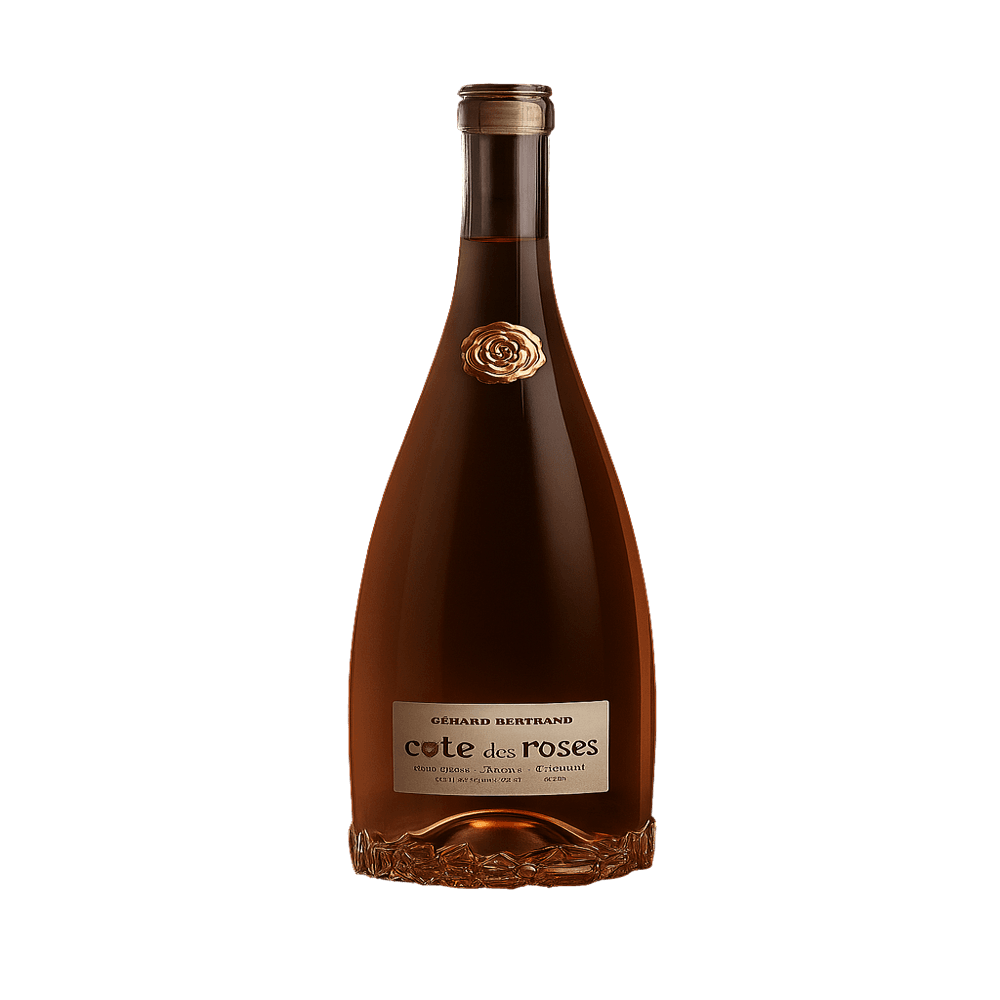
The Côte des Roses bottle design is one of the most recognized and discussed premium wine packaging achievements of the past decade — a heavy, hand-finished glass bottle with a rose in full bloom embossed into the base, visible through the glass when the bottle is tilted. That design decision was not incidental — it was a deliberate communication of the wine’s identity, its regional connection to the rose-growing traditions of the Languedoc coast, and a positioning statement that premium rosé deserves premium packaging that matches the occasion.
The bottle’s visual impact on retail shelves and table presentations has contributed meaningfully to the Côte des Roses brand’s international commercial success — making it one of the few wine brands where the packaging is a legitimate and discussed component of the product’s identity rather than simply a vessel. When collectors buy Gérard Bertrand Côte des Roses through Allocated Bourbon Vault, that packaging integrity — the embossed base, the label condition, and the fill level — is verified before dispatch as part of our standard inspection protocol.
Languedoc Rosé & The Premium Rosé Market
The global premium rosé market has undergone a fundamental repositioning over the past fifteen years — driven initially by the international success of Provence rosé and subsequently expanded by producers across southern France, including the Languedoc, who demonstrated that the quality markers of premium rosé were achievable outside the Provence appellation at more accessible price points. Gérard Bertrand’s Côte des Roses was among the most commercially significant expressions in that Languedoc premium rosé repositioning — a wine that delivered Provence-comparable aromatic precision and dry structure with the biodynamic production credentials and distinctive packaging that justified premium positioning in the international market.
For collectors building comprehensive French wine selections that include a premium rosé expression, the Côte des Roses delivers the most credentialed combination of producer reputation, biodynamic certification, appellation specificity, and packaging distinction in the Languedoc tier of the premium rosé category.
Storage & Serving Protocol
Gérard Bertrand Côte des Roses is designed for consumption within two to three years of vintage — the fresh primary fruit and floral aromatics that define premium dry rosé are at their most vibrant in the wine’s youth, and extended cellaring diminishes rather than develops the character of this style. Store unopened bottles in a cool, dark environment at approximately 10–14°C, away from direct light and vibration.
Serve well-chilled at 8–10°C — cold enough to preserve aromatic clarity and enhance the freshness that defines the style without suppressing the mid-palate fruit and mineral complexity. Once opened, consume within one to two days under refrigeration with a wine stopper to preserve aromatic freshness and prevent oxidation.
Premium Packaging & Secure Delivery Protocol
Every order fulfilled through Allocated Bourbon Vault is processed under our multi-point authentication and secure dispatch protocol. Côte des Roses bottles are inspected for closure integrity, embossed bottle condition, label authenticity, and fill level before dispatch — with particular attention to the signature packaging that is a defining characteristic of this expression.
All shipments are packed in reinforced, temperature-controlled cartons with tamper-evident outer sealing. Signature-required delivery is standard on all orders. Cold-chain routing is applied where seasonal ambient temperatures require it. Insurance coverage is included on every shipment up to full declared value.
Transactional Vault FAQs
Q: What grapes are used in Gérard Bertrand Côte des Roses?
A: Côte des Roses is produced from a Grenache-led blend incorporating Cinsault and Syrah — the three varieties most associated with premium southern French rosé production. Grenache contributes fresh red fruit and aromatic richness. Cinsault adds floral delicacy and the pale color characteristic of premium Languedoc rosé. Syrah provides structural backbone, mid-palate definition, and a subtle spice note that adds complexity to the blend.
Q: What does biodynamic certification mean for this wine?
A: Demeter-certified biodynamic viticulture treats the vineyard as a self-sustaining ecosystem governed by lunar and astronomical calendars, with all farming decisions made in alignment with biodynamic timing principles. Gérard Bertrand’s biodynamic certification across his estate vineyards is among the most significant commercial applications of biodynamic principles in France — producing wines with more expressive terroir character, higher natural acidity, and greater aromatic precision than conventionally farmed equivalents in the same growing conditions.
Q: Is Côte des Roses a dry or sweet rosé?
A: Dry. Gérard Bertrand Côte des Roses is a fully dry rosé with no residual sweetness — the fresh fruit and floral aromatics that characterize the nose and palate are entirely the product of the Grenache, Cinsault, and Syrah grape varieties rather than residual sugar. Dryness is a defining quality marker of premium Languedoc and Provence rosé and a consistent characteristic of the Côte des Roses expression across all vintages.
Q: How does Côte des Roses compare to premium Provence rosé?
A: Both styles share the dry structure, pale color, and fresh red fruit and floral aromatic profile that define premium southern French rosé. Provence rosé — particularly from the Côtes de Provence AOP — carries the more established international prestige designation. Côte des Roses delivers comparable aromatic precision and dry structure with the additional credentials of biodynamic production certification and Gérard Bertrand’s producer reputation — at a price point that typically undercuts comparable Provence expressions.
Q: Should Côte des Roses be consumed young or can it be cellared?
A: Consumed young — within two to three years of vintage. The fresh primary fruit and floral aromatics that define premium dry rosé are at their most vibrant and expressive in the wine’s youth. Extended cellaring diminishes rather than develops the character of this style. Purchase to enjoy promptly and serve well-chilled at 8–10°C for optimal aromatic expression.
Q: How long will this allocation remain available?
A: Inventory is updated in real time and no quantity holds are placed without completed checkout. Côte des Roses moves consistently across both retail and hospitality markets due to its international brand recognition and packaging distinction. We recommend securing your bottle without delay.