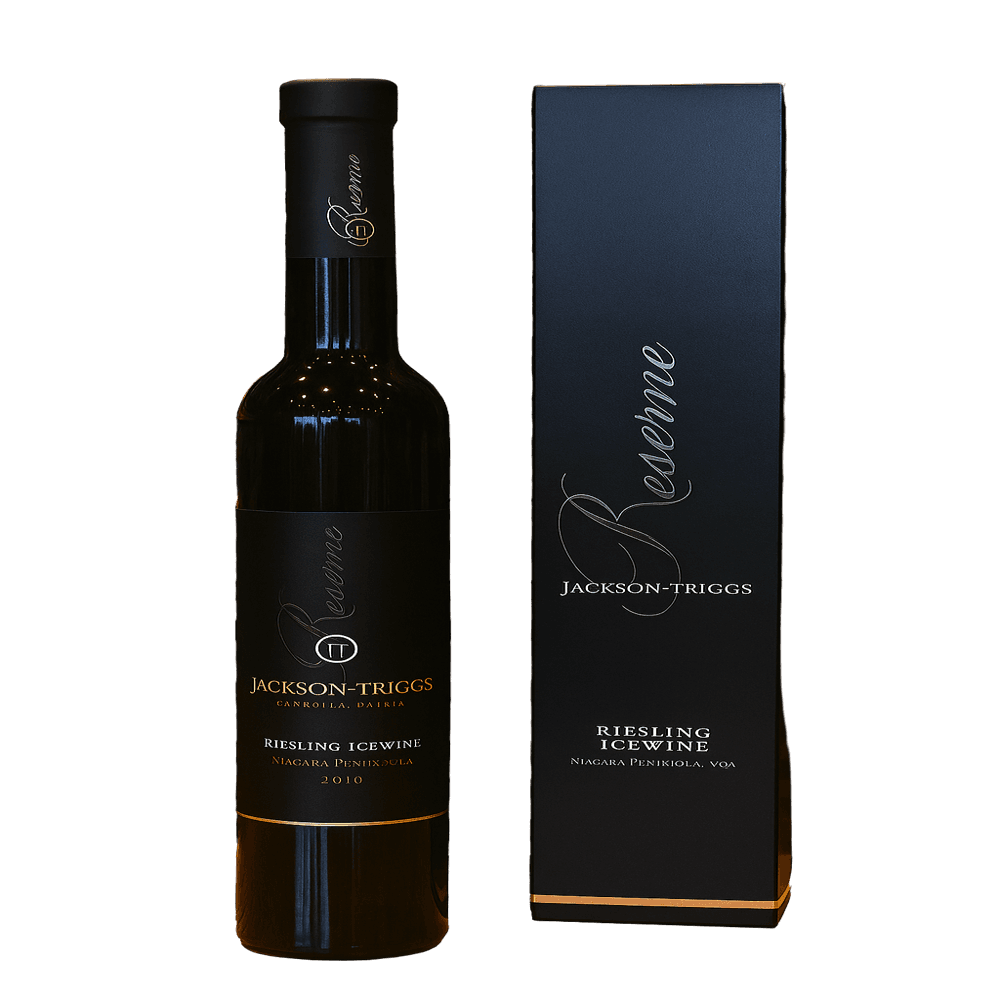
Description
The Producer Behind the Bottle
Jackson-Triggs is one of Canada’s most recognized and awarded estate wineries — a producer founded in 1993 in the Niagara Peninsula that has built its reputation on producing premium Vintners Quality Alliance certified wines across multiple styles, with its Icewine program representing the house’s most celebrated and internationally distributed tier.
The winery operates vineyards across both the Niagara Peninsula in Ontario and the Okanagan Valley in British Columbia — Canada’s two most significant wine-producing regions — with its Niagara estate providing the specific cold climate conditions that make genuine Icewine production reliably achievable on an annual basis. Jackson-Triggs has accumulated more major Icewine awards at international competitions than virtually any other Canadian producer, a record that reflects both the quality of its vineyard sources and the consistency of its harvest and pressing protocols across multiple vintages.
What Canadian Icewine Actually Is
Canadian Icewine is one of the most strictly regulated wine styles in the world — a designation protected by Vintners Quality Alliance standards that specify minimum harvest temperature, maximum pressing yield, minimum residual sugar levels, and geographic origin requirements that no producer can circumvent or approximate through technological shortcuts.
By Canadian regulation, grapes destined for Icewine must be harvested naturally frozen on the vine at temperatures of -8°C or colder. No artificial freezing, mechanical concentration, or cryoextraction is permitted under VQA Icewine standards — a regulatory distinction that separates genuine Canadian Icewine from the European Eiswein style, which allows mechanical assistance in some producing regions. The frozen grapes are pressed while still frozen, yielding a tiny fraction of highly concentrated juice — typically three to eight percent of the volume that the same grapes would yield if harvested conventionally at room temperature.
The Riesling Variety in Cold Climate Icewine Production
The choice of grape variety is critical in Icewine production, and Riesling’s specific characteristics make it one of the two or three most suitable varieties for the style — alongside Vidal Blanc, which dominates Canadian Icewine production by volume. Riesling’s naturally high acidity — the variety’s defining viticultural characteristic — provides the structural counterpoint to the extreme sugar concentration of frozen grape juice that lower-acid varieties cannot deliver.
Without sufficient acidity, an Icewine becomes a one-dimensional exercise in sweetness — syrupy, fatiguing, and lacking the length and complexity that great examples deliver. Riesling’s acidity cuts through the concentrated sugar to produce a tension between sweetness and freshness that is the defining quality marker of serious Canadian Riesling Icewine. The variety also contributes its characteristic peach, apricot, and floral aromatics at a concentration level that reveals flavor dimensions invisible in conventional Riesling at normal harvest ripeness.
The Harvest & Pressing Process
Icewine harvest at Jackson-Triggs’s Niagara estate is one of the most demanding and weather-dependent production events in the global wine calendar. Grapes are left on the vine through the autumn, protected by netting from bird predation, as temperatures progressively drop toward the harvest threshold. The harvest team monitors temperatures continuously — harvest can only proceed when temperatures have dropped to -8°C or below and are stable enough to ensure the grapes remain frozen throughout the entire picking and pressing sequence.
Harvest typically occurs in December or January — often in the early morning hours when temperatures are most stable at the required threshold. Pickers work by hand in extreme cold conditions, collecting the frozen grape clusters before transport to the press house. Pressing frozen grapes requires significant mechanical force and proceeds extremely slowly — the ice crystals formed within the frozen grapes resist juice flow, and only the most concentrated, sugar-rich portion of juice — which remains liquid at the harvest temperature — can be extracted. The yield per vine is a fraction of conventional harvest, making each 375ml bottle the concentration product of a substantially larger volume of frozen fruit than any standard wine format represents.
Tasting Profile & Sensory Architecture
The nose opens with an intensity and aromatic complexity that immediately signals the concentrated frozen harvest origin — fresh peach, ripe apricot, mandarin zest, and a distinctive honey note that defines great Canadian Riesling Icewine across producers and vintages. A delicate floral character and a subtle mineral note from the Niagara Peninsula terroir develop behind the primary fruit aromatics.
On the palate, the residual sugar concentration delivers the characteristic Icewine viscosity — coating, dense, and extraordinarily persistent — but Riesling’s natural acidity prevents the sweetness from reading as heavy or fatiguing. Peach preserve, apricot, lychee, and a citrus zest note develop through the mid-palate with a freshness and lift that lower-acid Icewine varieties cannot provide. The 9–11% ABV provides just enough alcoholic structure to carry the concentrated fruit flavors without introducing warmth that would disrupt the wine’s delicate aromatic character. The finish is very long, defined by concentrated fruit sweetness and a clean acidic precision that extends well past the swallow and invites the next sip rather than demanding contemplation.
The 375ml Format & Serving Protocol
The 375ml bottle format is the standard and legally appropriate vessel for Canadian Icewine — a sizing decision that reflects both the extreme production cost per liter of genuine Icewine and the wine’s appropriate serving volume as a dessert or contemplative pour. A standard pour of Icewine is 50–75ml — significantly smaller than a table wine pour — making the 375ml format the equivalent of five to seven generous dessert servings rather than a half-bottle of conventional wine.
Serve well-chilled at 8–10°C — cold enough to preserve aromatic clarity and enhance the freshness that Riesling’s acidity contributes without suppressing the concentrated fruit complexity. A quality dessert wine glass with a moderate bowl and a slightly tapered rim concentrates the aromatic intensity while directing the wine’s acidity-sweetness balance effectively on the palate.
Pairing Authority & Occasion Positioning
Jackson-Triggs Riesling Icewine performs across a range of pairing contexts that its sweetness level might not immediately suggest. The combination of extreme fruit concentration and Riesling acidity makes it one of the most food-flexible dessert wines available — sweet enough to anchor dessert pairings but structured enough to avoid the cloying quality that makes lower-acid sweet wines difficult to pair beyond simple fruit-based desserts.
Fresh fruit tarts, peach or apricot desserts, crème brûlée, and fresh soft cheeses all pair with particular authority. The wine’s acidity also makes it one of the few genuinely sweet wines that works alongside moderately spiced Asian cuisine — the sugar tempering heat while the acidity preserves freshness and palate clarity across multiple courses.
Collection Positioning & Gift Market Authority
When you buy Jackson-Triggs Riesling Icewine through Allocated Bourbon Vault, you are acquiring a bottle that carries both the prestige of Canada’s most internationally recognized wine style and the production credentials of one of the country’s most consistently awarded Icewine producers. The 375ml format, the distinctive label presentation, and the internationally recognized Canadian Icewine designation make it one of the most immediately understood and broadly appreciated premium gift wine choices available.
For bourbon and spirits collectors expanding their collections into premium wine and dessert wine categories, Canadian Riesling Icewine represents the wine world’s closest analog to the natural concentration and production rarity that drives collector interest in allocated spirits expressions.
Premium Packaging & Secure Delivery Protocol
Every order fulfilled through Allocated Bourbon Vault is processed under our multi-point authentication and secure dispatch protocol. Jackson-Triggs Icewine bottles are inspected for closure integrity, label condition, fill level, and VQA certification seal authenticity before dispatch.
All shipments are packed in reinforced, temperature-controlled cartons with tamper-evident outer sealing. Signature-required delivery is standard on all orders. Cold-chain routing is applied where seasonal ambient temperatures require it. Insurance coverage is included on every shipment up to full declared value.
Transactional Vault FAQs
Q: What legally defines Canadian Icewine and how is it different from German Eiswein?
A: Canadian VQA Icewine regulations require natural grape freezing on the vine at -8°C or colder, with no artificial freezing or mechanical concentration permitted at any stage. German Eiswein regulations are less prescriptive — some European producing regions allow cryoextraction or mechanical assistance in the concentration process. Canadian Icewine’s regulatory framework is among the strictest applied to any wine style in the world, and the natural freezing requirement is non-negotiable under VQA standards.
Q: Why is Riesling particularly well-suited to Icewine production?
A: Riesling’s naturally high acidity is the critical factor. Extreme sugar concentration without sufficient acidity produces a one-dimensional, fatiguing sweetness — the quality failure mode of lower-acid Icewine varieties. Riesling’s acidity cuts through the concentrated sugar to produce a tension between sweetness and freshness that defines great Icewine. The variety also contributes its characteristic peach, apricot, and floral aromatics at a concentration level that reveals complexity invisible in conventional Riesling at normal ripeness.
Q: Why is Icewine sold in 375ml bottles rather than standard 750ml?
A: The 375ml format reflects both the extreme production cost per liter of genuine Icewine and its appropriate serving volume as a dessert wine. The tiny juice yield from frozen grape pressing — typically three to eight percent of conventional harvest volume — makes full-size bottle production economically and practically impractical for most producers. The 375ml format provides five to seven generous dessert servings at the appropriate 50–75ml pour size.
Q: How should Jackson-Triggs Riesling Icewine be stored before opening?
A: Store in a cool, dark environment at approximately 10–14°C — the same conditions appropriate for most quality white wine cellaring. The wine’s high sugar content and moderate alcohol provide natural preservation, but temperature stability and protection from direct light remain important for maintaining aromatic freshness over the medium term. Consume within five to ten years of vintage for optimal primary fruit character.
Q: Is Canadian Icewine appropriate as a gift for someone unfamiliar with wine?
A: Yes — it is one of the most broadly accessible and immediately impressive premium wine gift choices available. The Canadian Icewine designation is internationally recognized and understood as a prestige designation. The peach, apricot, and honey flavor profile has cross-demographic appeal independent of prior wine familiarity. The distinctive 375ml format and premium label presentation communicate quality immediately without requiring any category knowledge from the recipient.
Q: How long will this allocation remain available?
A: Icewine production is inherently limited by weather-dependent frozen harvest conditions — not every vintage produces sufficient freeze events for full Icewine production. Available inventory reflects a genuinely constrained production reality. Stock is updated in real time and no quantity holds are placed without completed checkout. We recommend securing your bottle without delay.